Rugby union can be quite a complex sport to get your head around if you’re new to the game, but our quick guide to the methods of scoring and how much points each is worth should help you get started.
You might not be an expert after this guide, but you’ll certainly surprise your friends and family with a little bit of knowledge that they didn’t know you had! Remember, everyone started somewhere!
How do you get points in rugby union?
So, you can get points in rugby union by either:
- Scoring a try (5pts)
- Converting that try (2pts)
- Landing a drop-goal (3pts)
- Kicking a penalty (3pts)
- Penalty try (7pts)
How much is a try worth in rugby union?
In rugby union, a try is worth 5 points on its own.
There is also always the possibility of an extra 2 points being added if the following kick (called a conversion) is scored.
So the maximum score of a converted try is 7 points, making it the most valuable type of scoring method.
Here’s one of the most famous tries ever scored – by Gareth Edwards for the Barbarians against the All Blacks in 1973…
How many points are penalties and drop-goals worth in rugby union?
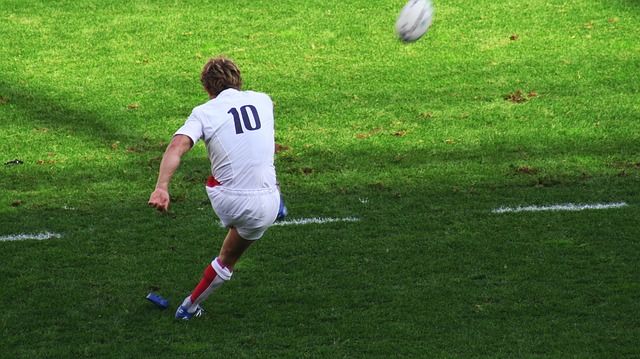
Penalties in rugby union. If a team is awarded a penalty and opted to kick at the posts – ‘going for the sticks’ as they say – they will get 3 points if the kick is successful.
If it is unsuccessful, they get no points and the opposition usually take a drop-out 22 (a type of restart).
Drop-kicks (or drop-goals) in rugby union. A drop-kick happens in open-play and the ball must bounce before it is kicked to be considered a drop-kick rather than a regular punt. If it is successful and sails through the uprights, it is worth 3 points!
Here’s the most famous example (probably ever) of a drop-kick by the famous Jonny Wilkinson back in the 2003 Rugby World Cup Final.
How much is a penalty try worth in rugby union?
A penalty try is another method of scoring in rugby, which is a type of try that is awarded by the referee (usually if an act of foul play has stopped the team from scoring).
The penalty try now counts as an automatic 7 points, as the conversion does not need to be taken anymore due to new laws.
Things that DO NOT amount to points
To save you the embarrassment of cheering for the wrong type of kick or at something that isn’t really all that important, here’s a few things that are NOT going to get your team points:
- Touching the ball down over your own try line
- A punt (kicking the ball without it bouncing first)
- Kicking the ball to touch
- Getting tackled over the touch line
- Calling a ‘mark’
- Getting a yellow or red card (definitely not good)
Rugby advice and guides for all fans at Sport-Reviews
Get all your rugby union and sporting guides here at Sport-Reviews, where we provide guidance and information to all.
You might like:
 Sport-Reviews.co.uk
Leave a reply to The Highest Paid Rugby Players in the Word during 2020 – Sport-Reviews Cancel reply